
Birth and the city
On Exit, urban space, rewilding, and avant gardes (Futurism Notes Pt. 2)

The true and most important function of the avant-garde was not to experiment, but to find a path along which it would be possible to keep culture moving in the midst of ideological confusion and violence. Clement Greenberg, 1939, “Avant-Garde and Kitsch”
Part 1
To build
“Let’s understand what time it is,” Balaji Srinivasan declared this past weekend on X. “There is no Building Back Better or Making America Great Again… When you see the big picture you can see that the American experiment is over.” According to the author of the The Network State, America is exhausted, crippled by sclerotic institutions, unpayable debt, and political factionalism. “It’s sad, because Uncle Sam was a really great guy. But we need to prepare for his passing, and rebuild after his fall.” The only path forward: leaving to construct new political and spatial forms grounded in shared values, cryptographic consent, and mobile citizenship. Only the network state will allow civilization to persist after America falls.
Is he right? The network state might be this century’s most interesting new spatial form. But the rush to exit is premature. America isn’t finished; what’s finished is just one idea of itself.
Together with discourses of exit, imaginative visions are circulating of building new cities beyond the inhabitable world —on Greenland or Mars. Meanwhile within the US itself projects like California Forever and Starbase seek to revitalize American industry by placing the country on the path to the stars. The idea of the city –its space and its form — is reemerging as a force of speculation, and bringing with it a series of questions which have been overlooked for some time:
Trump says we need Greenland “for psychological reasons.” Andreessen and others say: “it’s time to build.” But what does building mean, what are we building, and what are we building it with? Why, now, has city-building returned? And why, despite this, does the space for maneuver feel so constrained?
Discourse surrounding America’s urban crisis remains dominated by issues of housing and proposals of building more units. But the intensity of recent fights over where and how to build —for example around HUD’s proposal to build millions of affordable housing units on federal land— makes clear that issue is more complex. It is not just a question of quantity but the kind of spatial environments we are producing, and the forms of life which they generate and sustain.
The truth is that we barely even know where we are. The problem of urbanism has returned to America because America is undergoing a spatial regime shift. Our crisis is not only political or economic but environmental, in the deepest possible sense: existing conceptions of spatial forms can no longer metabolize the forces now animating our lives, and our world. The result is stagnation where there should be creation.
The contemporary city combines material breakdown with subjective suffocation. Crime, disorder, crumbling infrastructure, and managed decline scar urban life. Meanwhile technical changes have radically altered the experience of urban space. The city is becoming an interface interlinked across screens, feeds, and predictive systems that preempt behavior, convert desire into data and interaction into feedback. The city is feral and overdomesticated at all once, at different pitches.
Faced with these changes, urban thought must be conceptually aggressive and experimental at full scale. Instead, thinkers are caught repeating homogeneous virtue terms ad nauseum, producing “mere building” instead of confronting the vertigo of contemporary life. Architect Patrik Schumacher thus pronounces architecture itself dead, self-annihilated, dissolved into spectacle and political theater. The same point can be made with respect to urbanist thought and design, which has to abandon this dead weight and recover its sense of the frontier.
By nature
The city is often considered off-handedly as a technical artifact assembled by human intention. Aristotle says something different: the city comes into being “by nature” and unfolds “in the same way an adult human being comes to be from embryo, neonate and child.” The city is phusis, with its own origin and end. Urban space is not really a human construction, but an arena in which dynamics of nature —and human nature— play themselves out.
The city is nature manifesting itself, and one of the main sites where human nature is formed and made real. Human beings do not simply “have” a nature. They become what they are by entering structured environments that extract, concentrate, and intensify certain potentials. Cities metabolize forces and thereby select and shape human nature through feedback.
Aristotle sees the polis as the most mature form of this process and also the highest form of human community; it is the environment in which speech, judgment, virtue, and responsibility become real. The polis is “prior by nature” to the individual, he adds, because the individual is only a part, not a whole —outside the city, he says, the individual is “either a beast or a god.”
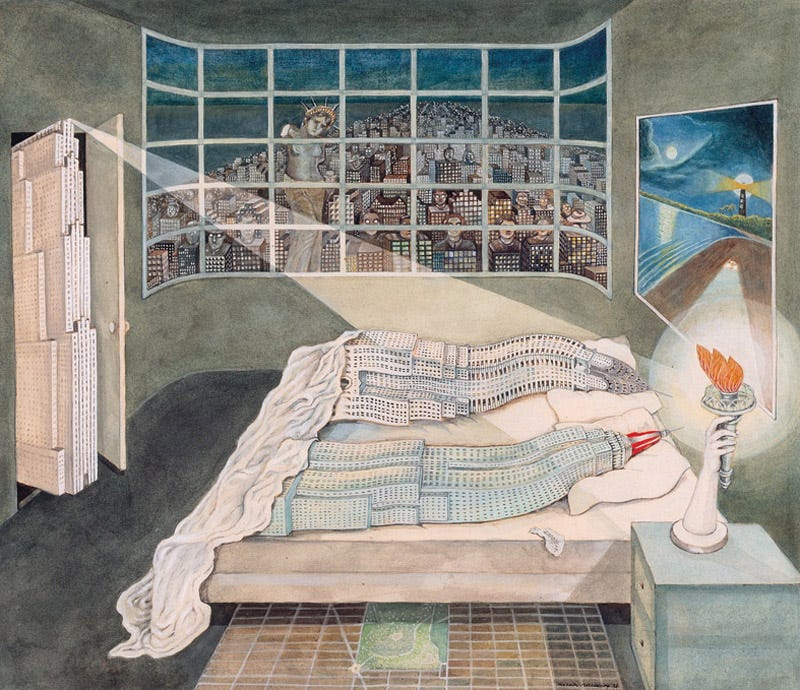
In Delirious New York —still amongst the most beautiful urbanist texts ever written— Koolhaas treats Manhattan as a laboratory that invents itself by stacking time. The Metropolis annuls previous architectural history, not through critique, but through scale, speed, and congestion. It produces congestion on all possible levels and channels the pressure this generates to create a distinct culture. Manhattan is not simply an artifact, in the sense of a blueprint, but a generative form which grows according to its own internal logic. The city metabolizes constraint, infrastructure, and desire into emergent order. Manhattanism describes an alien cognition: the grid as substrate, congestion bleeding into computation, the city’s unconscious dreaming itself into concrete activity and thereby creating conditions no architect would dare to imagine.
Between poles
Urban evolution is not linear but a dynamic clash of emergence and containment. The great cities were flashes in time where this tension was held in a state of dynamic polarity. Classical Athens is a striking example. It was Western civilization’s womb —a moment when passionate human beings transcended bare life through the creation of a public space of freedom and responsibility. The polis became a machine for the cultivation of virtue. It gathered temples and festivals, music and war, competition and fitness, science and politics to produce a particular kind of human being, and culture.
The polis was also an erotically charged space and eros was understood to be causal factor in its emergence and maintenance. Pericles called on his fellow citizens to become erastai of the polis: “Fix your eyes on the city of Athens, and fall in love with her.”
The Greeks understood something that we have forgotten: the city must be loved to be fertile, and fertile to be loved. The capacity to fall in love with a city —to feel its potential, to be drawn into it, to make a home in it— is intertwined with the capacity to fall in love at all. A city that cannot be loved produces humans who cannot love. Today urban residents go out less, have fewer romances, fewer adventures, and fewer children. There is a connection between urban form, eros, and fertility that we have not yet seriously tried to think.
Classicism today tends to towards nostalgia – PowerPoints of marble statues, sterile vocabulary of “excellence,” and a tone of moral seriousness designed to flatter those who speak it. The background is always decline and the cure is always return. But Greek culture didn’t rest on calm order. It was built in tension – Apollonian beauty held in suspension against Dionysian ecstasy. Hesiod begins the world not with harmonious creation but with chaos. Gods overthrow fathers, and fathers fight wars with their sons. The world is seeded with monstrosity and existed at the frontier of chaos. The city doesn’t abolish this wildness but metabolizes it, domesticates it, and yet retains contact with it. The classical legacy to be reclaimed today is not Doric columns, but tension and eros, which is the secret of cities at the height of their power — nature maintained in suspension as form. But what shape could this take for a contemporary city riven by radically different and rapidly transforming spiritual and technological conditions?
Part Two
In advance
“Avant-garde” is a military term: it means advance guard, scouts sent ahead to test terrain and take risks. Conceived in ecological terms, one could say that these are pioneer species — first arrivals that thrive at the edge and also alter it, producing chain effects that make subsequent new forms of life possible.
Avant-gardes are born from the city. When the urban field becomes over-administered and over-domesticated, pressures build up. At those moments, avant-gardes appear as a kind of immune activation —artists, theorists, architects, poets push into limits, break sterile forms, reopen the space of possibility.
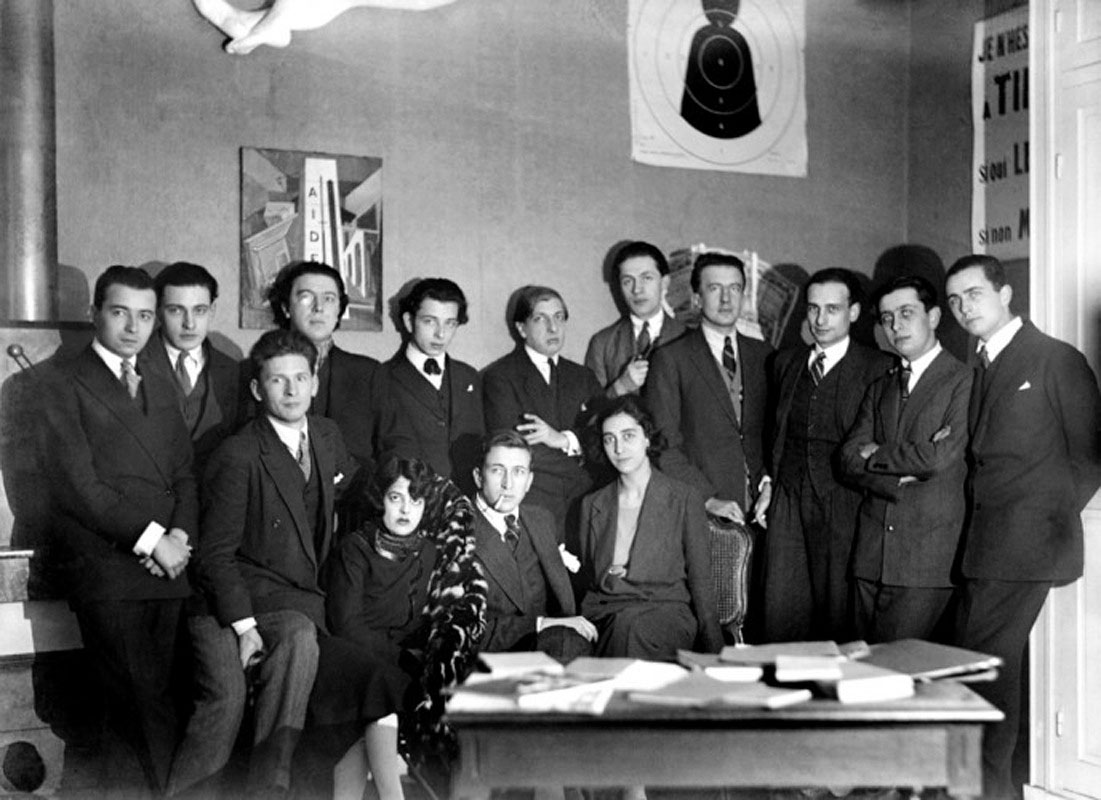
The Surrealists are one example. They emerged in a 1920s Paris that had, two generations earlier, been radically reshaped by Haussmann’s rationalist transformations — wide boulevards, uniform facades, demolished medieval quarters. Their city was already rationalized, and modernist planning discourse posed further redevelopment. Le Corbusier’s 1925 Plan Voisin —never built but widely exhibited— proposed demolishing a large section of the historic Right Bank and replacing it with eighteen cruciform towers rising from parkland, automobile traffic flowing freely beneath. Expansive boulevards, hygienic light, electricity, visibility: the ideal modern city was to be transparent and legible. There was beauty to this vision and also suffocation.
Surrealism registered this as an attack on interiority and desire. To the Surrealists, modern space felt over-determined. Meanwhile, in a context of postwar disenchantment and Freud’s excavation of the unconscious, modern media was producing an optical city of surfaces: cinema and photography transforming perception, mass advertising saturating urban space with dreamlike juxtapositions…
But the Surrealists weren’t nostalgic for the past or the outside. Theirs was a response to the strange city-space that modernization produced — a metropolis that was controlled yet densely semiotic, a montage of signs and crowds, thresholds and discontinuities. Precisely at the moment the city became its most rationalized, the Surrealists explored it as another city entirely. They opened the Bureau of Surrealist Research, an office where Parisians were invited to bring dreams and confessions. They invented the proto-dérive, wandering together through the city without fixed destination, letting chance and charged atmospheres direct their route. These were spatial actions to reactivate and even liaise with forces the modern city suppressed—chance, eroticism, the uncanny. Aragon’s Paris Peasant presents a dream labyrinth city, a dream-body or surface that desire navigates; the Passage de l’Opéra is its underside. Breton’s Nadja is Paris as psychic and erotic ecology of chance meetings with a phantom girl who is also totally insane…
The Situationists deepened the same impulse a generation later, shifting the Surrealist dream encounter into explicit spatial tactics of the drift and détournement. In each case the target is not “modernity” in a moral sense but the closure of space and subjectivity — their over-rationalization, their conversion into planned circulation and managed routine. Avant-gardes emerge when the city’s polar tension collapses, when wild and domesticating impulses no longer hold each other in charge. They reopen the city by restoring thresholds.
The same function reappears inside architecture. Archigram’s Walking City and Plug-In City rejected postwar planning’s bureaucratic fixity, imagining the city as a reconfigurable modular, mobile, responsive interface. From this lineage emerges Koolhaas also: the metropolis as dream-body, Manhattan as machine of desire, congestion as an urban erotic principle. An architectural field of forces – infrastructure, logistics, air-conditioning, finance, escalators, the continuous interior and the generic…
We have no institution performing this function today, almost no spatial thinkers even attempting it, and no new city projects ambitious or strange enough to meet the moment.
At dusk
Today city space mutates again. A new domestication unfolds. We inhabit cyberspace and physical space simultaneously — a psychological and geographic condition we don’t fully understand but which transforms our lives and relations immensely.
The city has been cybernetic for a long time; 1960s automation evolved into the age of social media and resilience discourse, flattening desire into information and coordinating infrastructure, people, and nature into the complex self-adapting systems we inhabit now. But something is shifting again, as real-time synthetic language proliferates and daily activities are increasingly conducted inside LLM-mediated interfaces. The owl of Minerva no longer takes flight even at dusk. She circles endlessly, caught in her own feedback, hooting data.
This morphing cybernetic city of order is mirrored by what Kilcullen calls the feral city: riots, defunded police, managed decline, encampments, broken infrastructure. A low-grade degradation settles in.
America’s urban crisis is constantly declared and poorly understood. It is not only crime or housing costs or overregulation or crumbling infrastructure, but a spiritual and psychological condition inseparable from our built environment. Urban life has become sterile and feral at once – feral at the level of material order, overdomesticated at the level of psychic life.
This touches eros too. The erotic charge of the city was always partly the charge of anonymity: the stranger, the chance encounter, the unknown. But the cybernetic city threatens to eliminate the stranger and strangeness itself, to convert desire into data and interaction into feedback.
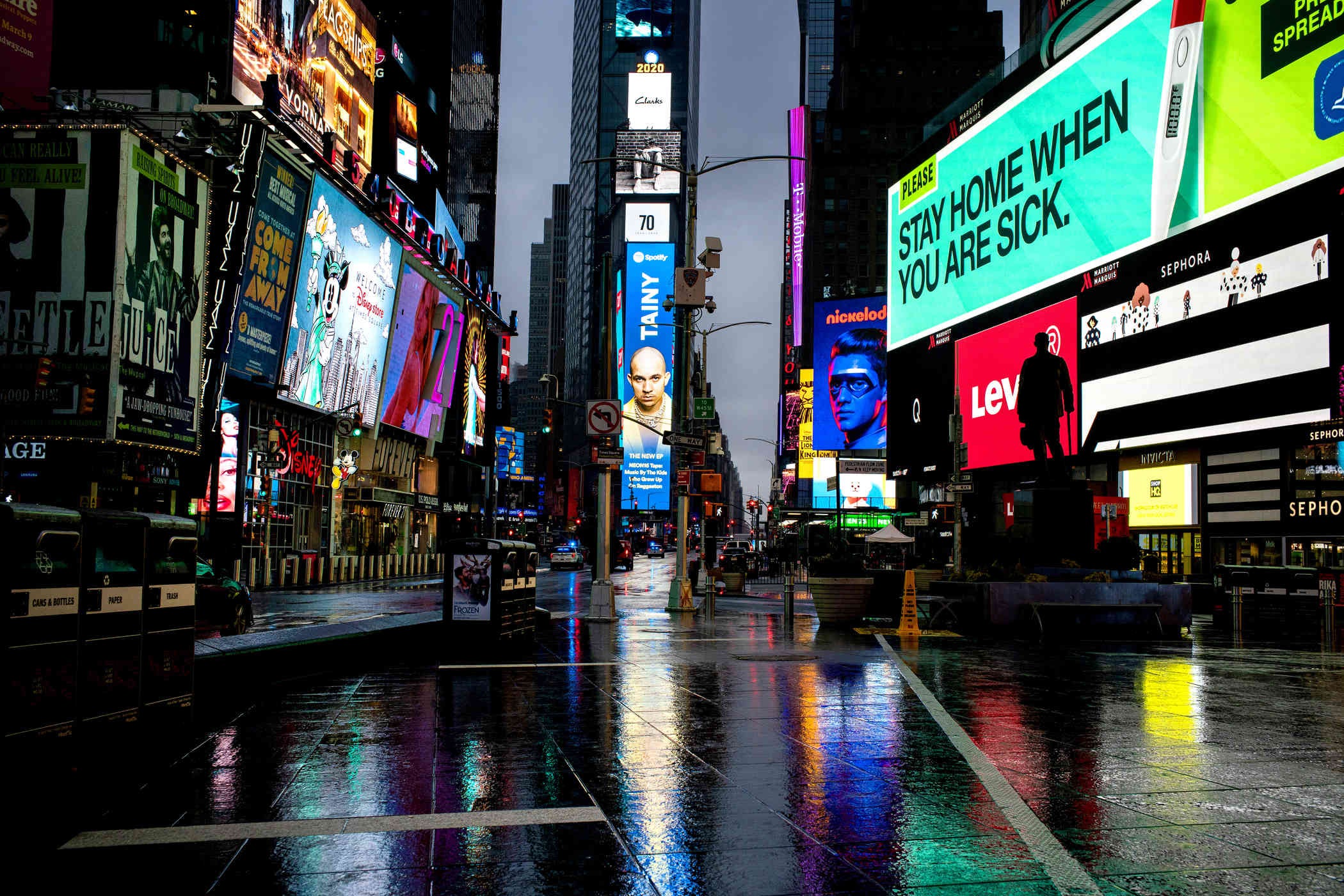
The 2020 Covid lockdown offers an image of this trajectory. Empty streets, boarded-up cafés, children staring at Zoom teachers, delivery apps replacing restaurants, QR codes replacing touch. Urban conviviality and sensuality were evacuated and translated into metrics — case counts, movement patterns, compliance dashboards — as the city became a monitored preserve emitting continuous feedback. And simultaneously, the Floyd riots. The lockdown city was not a pause but a remodulation, perhaps a birth announcement.
Nick Land, writing from Shanghai in 2013, speculated:
Does urban development exhibit the real embryogenesis of artificial intelligence? Rather than the global Internet, military Skynet, or lab-based AI program, is it the path of the city… that best provides the conditions for emergent superhuman computation? …When the first AI speaks, it might be in the name of the city that it identifies as its body, although even that would be little more than a ‘radio fossil’—a signal announcing the brink of silence—as the path of implosion deepens and disappears into the alien interior.
Anyone who has used Claude Code seriously has already felt it: something just advanced.
The interesting question is not whether this can be stopped (it cannot) but whether it can be inflected. Can the city-as-AI-body be built in a way that does not flatten the humans passing through it? Can the city be made both a womb for its own progeny and for vital new kinds of humans, and their children and works?
In his recent America Diary for New Models Lil Internet, reflecting on AI and the hallucinogenic character of the present, notes: “in the past when gods were among us our ancestors developed rituals to engage and commune with them. [Today] capital produces fragmentation,” he observes, “platforms degrade existing social order, and artificial intelligence threatens consciousness itself when we learn how to create gods and forget how to create rituals.” Somehow I think this is related.
Toward sky
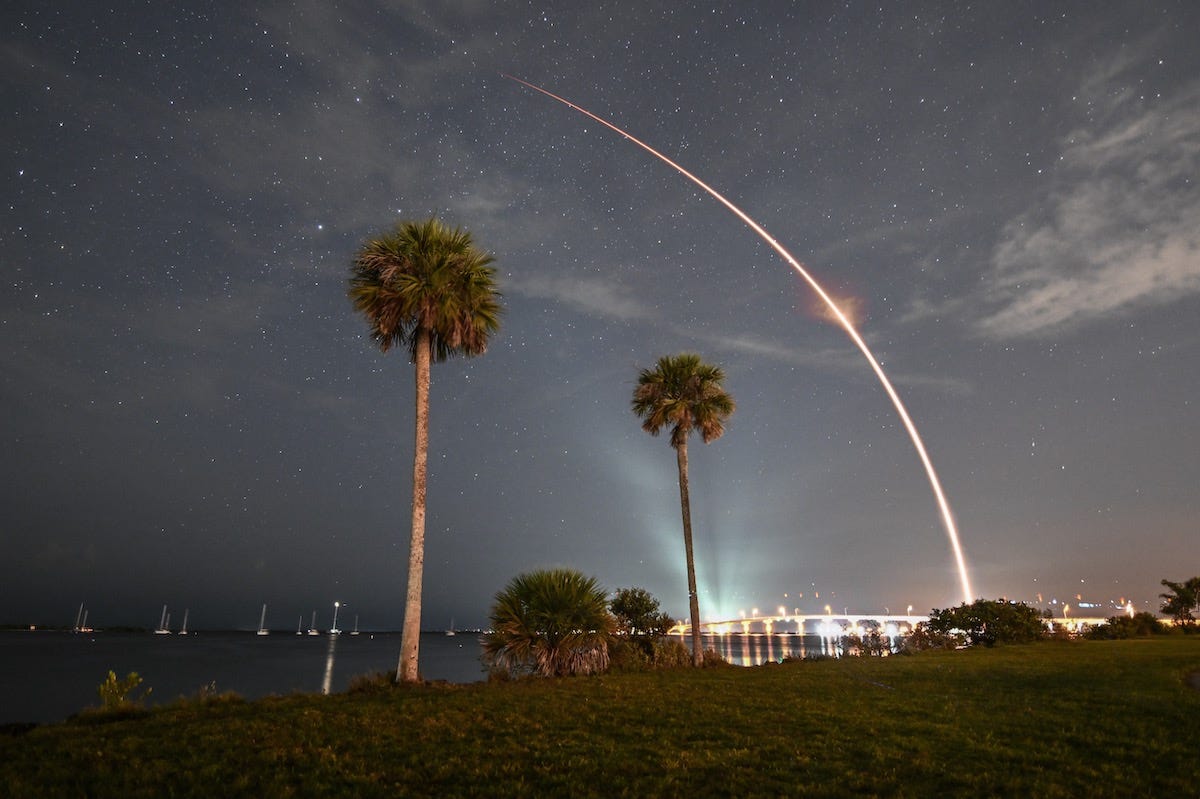
If city-building has returned as a live American question, Starbase may be its clearest signal. The “gateway to Mars” frontier city, recently incorporated, is already a new urban prototype: part company town, part spaceport, oriented not toward the inherited metropolis but outward, toward the sky.
Amid talk of Silicon Valley exit, commentators including Srinivasan have floated abandoning California and intentionally reaggregating around the burgeoning space city. Michael Gibson’s mythopoetic framing of this —”Starbase may well become the Alamo”— should be developed. The Alamo was a last stand but also an outpost, a forward fort on contested terrain. The metaphor aligns with the avant-garde function: Starbase as not only redoubt but spearhead, a small group exposed to asymmetrical pressure, whose willingness to take risks opens new paths.
What is needed is ambitious research and development around the American built environment: new concepts of space, new urban forms, new people and institutions capable of thinking at the frontier. Interest in cities is widespread but the institutions tasked with urbanism no longer generate serious thought or form. The real spatial frontier is being reopened elsewhere — by engineers, entrepreneurs, unaffiliated thinkers, often without any conceptual frame at all.
Heidegger’s famous claim that the postwar German housing crisis was really a crisis of dwelling was more futurist than his usual nostalgia suggests. What he actually said is that “mortals ever search anew for the nature of dwelling, that they must ever learn to dwell,” and he said it at the 1951 Darmstadt Symposium, where architects like Gropius and Mies gathered with philosophers amid postwar rubble to rethink building from the ground up. The question wasn’t just how to house people but how to think space at all under radically new conditions.
We need our own symposium on Man and Space for 21st century America. The goal is to understand the conditions we actually operate in and force the emergence of new spatial concepts and audacious design prototypes — radically heterodox proposals from people with the imagination to treat the city as a frontier problem again.
The question is whether we can build environments adequate to the forces now moving through us, and whether America still has the capacity to found new forms of life rather than merely administer decline.
Ultimately ‘return’ is neither possible nor desirable — but neither is Exit (yet).
Nothing is finished.
America is a monster of terrifying potential suspended in tension between order and chaos.
Cortés burned his ships upon arriving in Mexico. No way home, success or death — this is the founding spirit of the Americas and it is the opposite of Exit.
“This is the space age and we are here to go.”
this is great steph. the parts about the city and it's connection to love are what i've tapped into as well. post 2020 the robotification of all relationships and transactions turned nyc into a sea of npc's without the will to love, only react and regurgitate.
because the primary infrastructure in the city is capital, if you dont have a sizable amount of it the range of the frontier becomes incredibly limited in scope. im hopeful for a non-urban avant guard, that's what im doing anyway